Can a prosaic web form capture the magic of browsing at a beloved bookstore?
Project
IDEO
“Human-Centered Service Design”
Winter 2021
Deliverables
- Customer Journey Map
- Future-State Service Blueprint
Key Skills
- User Research
- Journey Mapping
- Prototyping
- Service Blueprinting
Background
Powell’s Books is the world’s largest independent bookstore, selling new and used books online and at its iconic Portland shops. I decided to practice human-centered service design by redesigning the online process for customers to sell their used books to the store.

Challenge
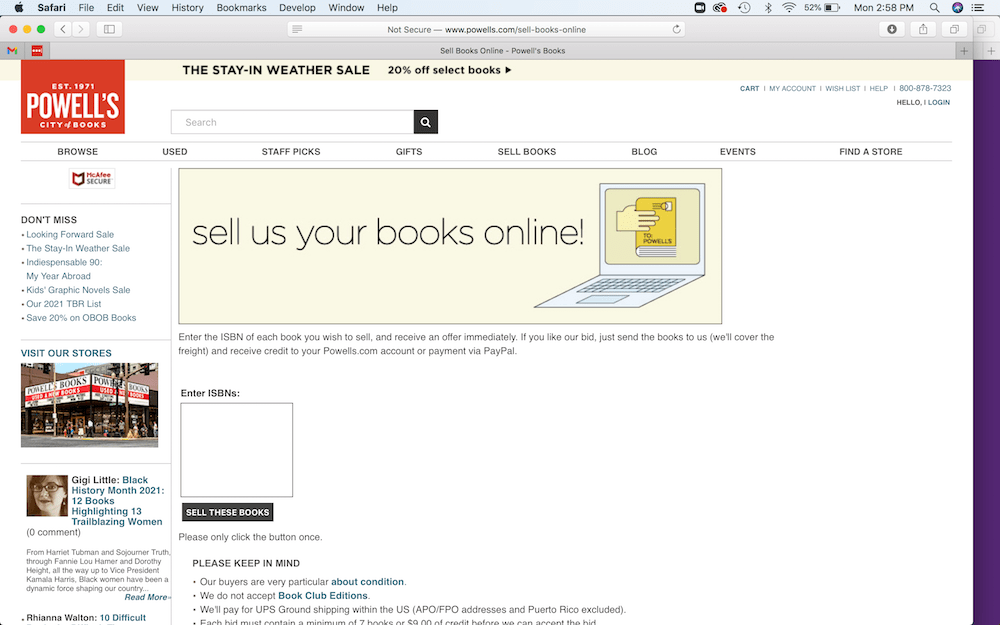
Normally selling used books to Powell’s is a physical endeavor: you lug a box of books to the store and an employee scans each book and tells you which ones the store will buy. The online process, which requires typing ISBNs (book identification numbers) into a form and then shipping a box of your books to a warehouse, was mostly used by people who lived outside of Portland.
That is, until COVID-19 hit. Just when people had plenty of time to clean out their bookshelves, Powell’s closed its physical stores. Use of the online book selling site skyrocketed—and so did users’ frustrations.
The selling site is bare-bones, offering little guidance and none of the enthusiasm and charm of the store’s brand personality. Typing in every single ISBN is laborious. Technical errors and occasional data loss make for a discouraging experience.
I wanted to address both the operational and the experiential aspects of the online book-selling process. How might we create an online book-selling experience that works smoothly AND captures the thrill of shopping in the physical store?
What I Did
Identify the Ideal Customer
All experience design begins with empathy for the user. For this class, I was able to invent who that user would be, developing a persona to help focus my design work. (Normally this would be based on marketing goals and audience research.) Conveniently, I and several of my friends fit this persona, so I was able to vet ideas and prototypes with real people throughout the project.

Ava is an avid reader who likes new books and has a thrifty streak. She has enough money to buy books rather than borrow them, but she’s willing to put in the effort to sell her books when she’s done with them in order to make a bit of cash. She believes books have value and she wants to share that with others.
Ava feels good knowing her books are going someplace where they will be read. When the store buys a lot of her books, it affirms her good taste. And the cash she receives is the perfect excuse to buy more books!
The User Journey
I tried the online selling process myself, submitting about 70 books for consideration. Then I observed two friends via Zoom as they tried to sell their books. Both participants abandoned the process partway through, driven to frustration by the site’s errors and lack of guidance.

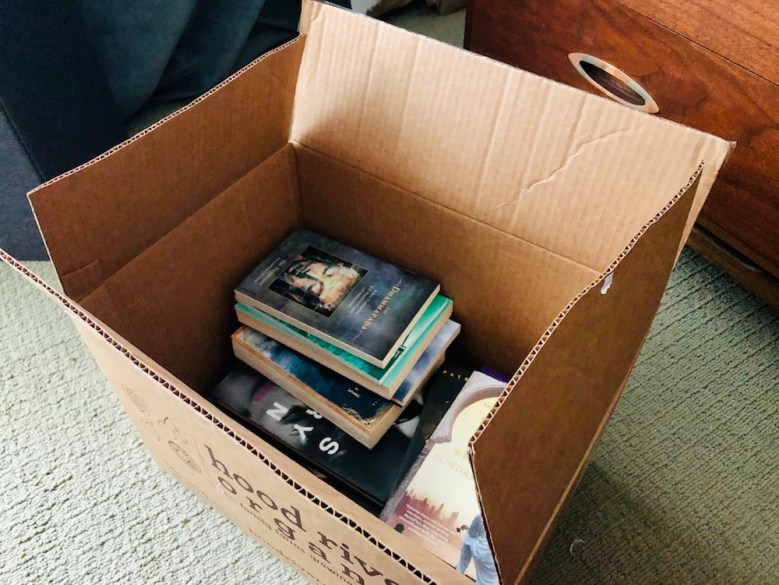
Once you make it through the submission process, you still have to deal with the books themselves, sorting out the ones Powell’s wants, lugging them to the shipping place, and figuring out what to do with the remaining books. This was no small amount of effort in my case.
I crafted a journey map based on these three experiences, and decided to focus on improving the process of entering ISBNs, since it is the foundational action of the experience. How might we make the process of entering ISBNs faster and more fun?
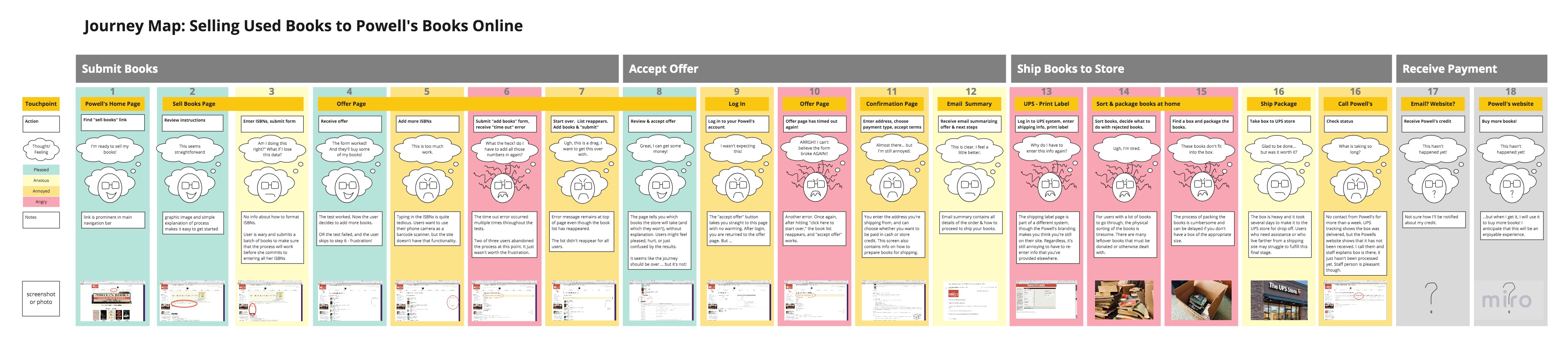 Click to see the journey of the user’s hairdo full-size.
Identifying Improvements
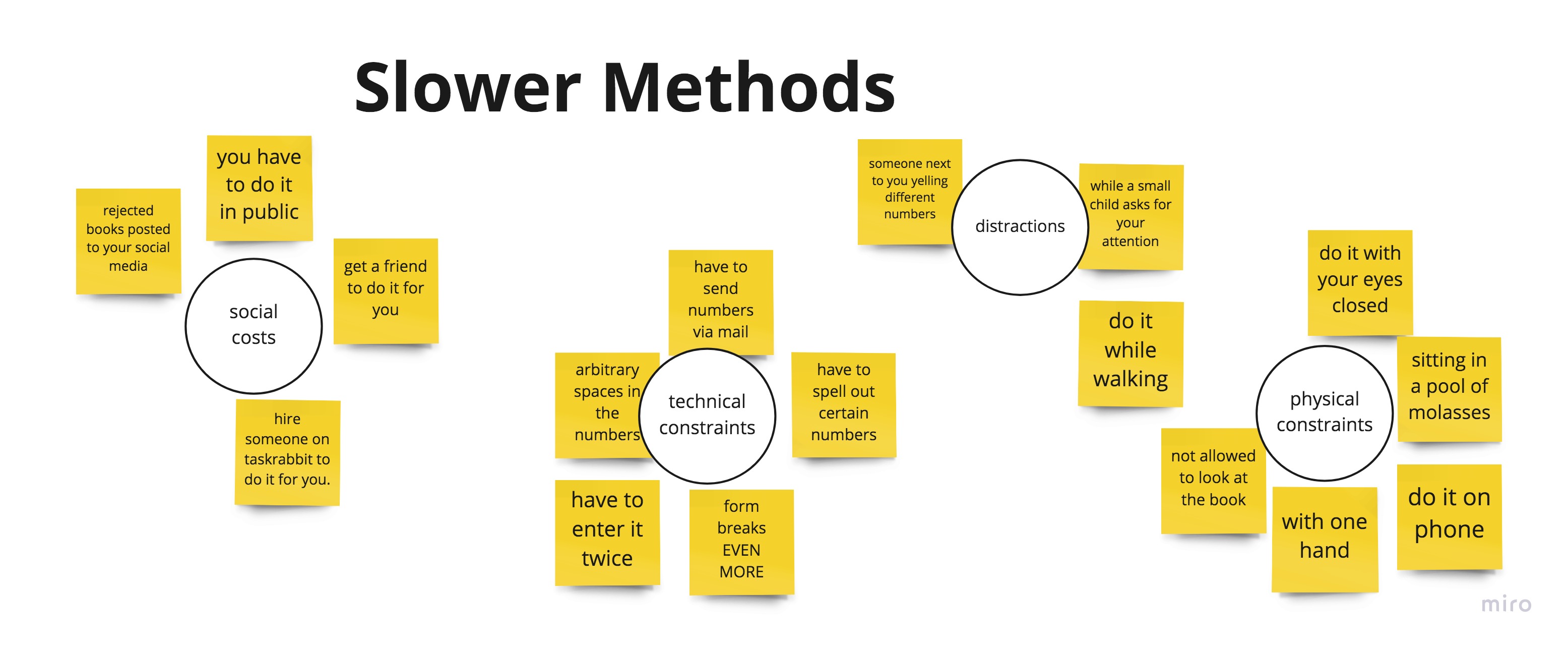
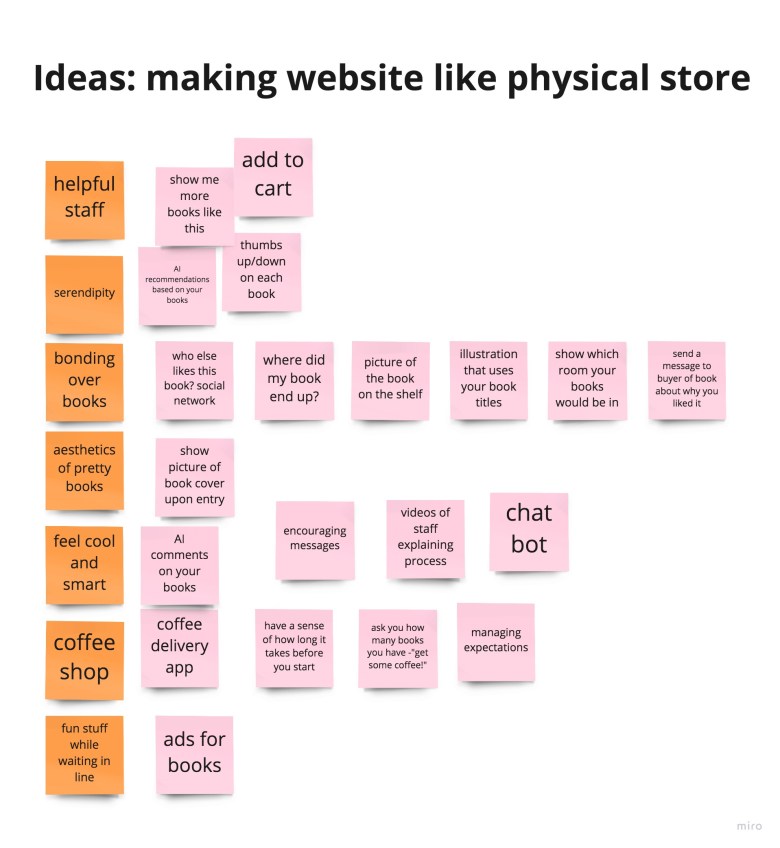
I facilitated an ideation session with a book-loving friend. First we brainstormed ideas for making the process even slower. This is a great way to start a brainstorming session: thinking about the opposite of the problem you’re trying to solve can help anxious participants relax because there’s no right answer.
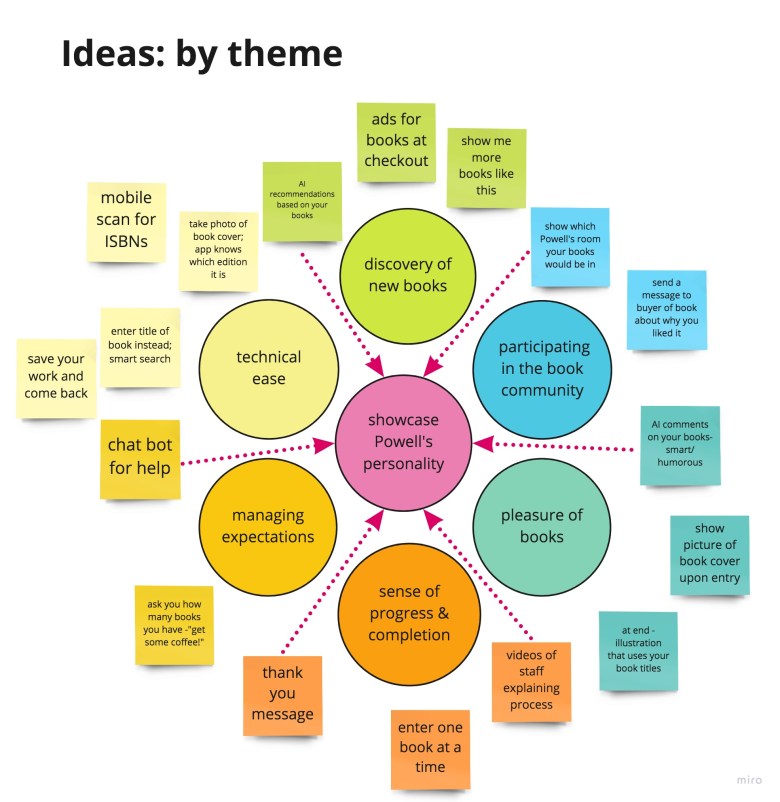
We then talked about what made shopping at Powell’s in real life so fun. The flagship store, which occupies a full city block, is beloved by tourists and locals alike. There’s a sense of serendipity and discovery, of being a part of a community of book lovers. Color coded rooms, written book recommendations from staff, a in-store coffee shop. How could we incorporate the spirit of those elements into the website? We came up with a robust list of options, which clustered into several themes.
Prototyping
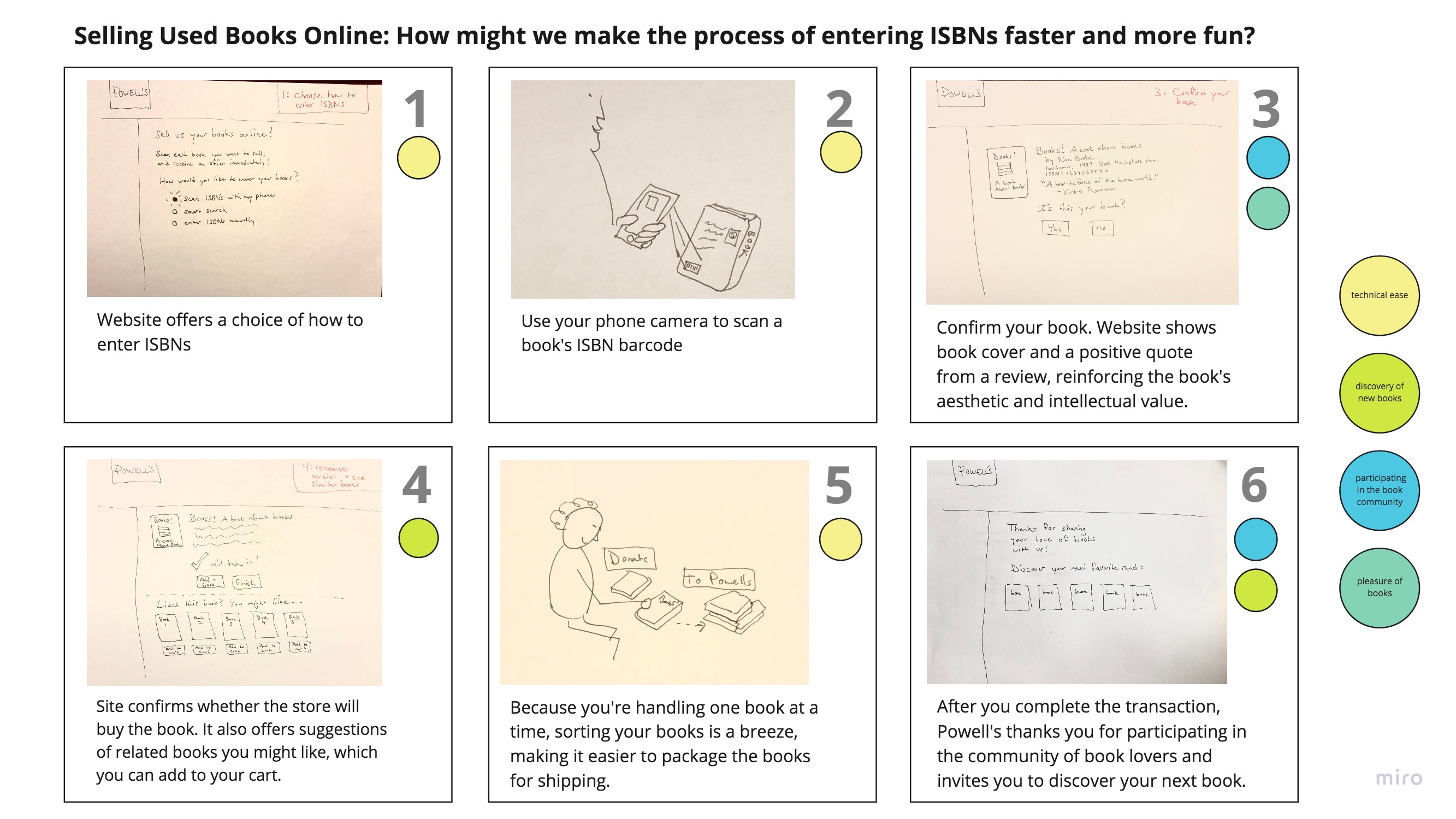
I made a quick storyboard highlighting how we might incorporate several of these ideas into a new service blueprint. Color coding shows how each step relates to the themes.
Service Blueprint
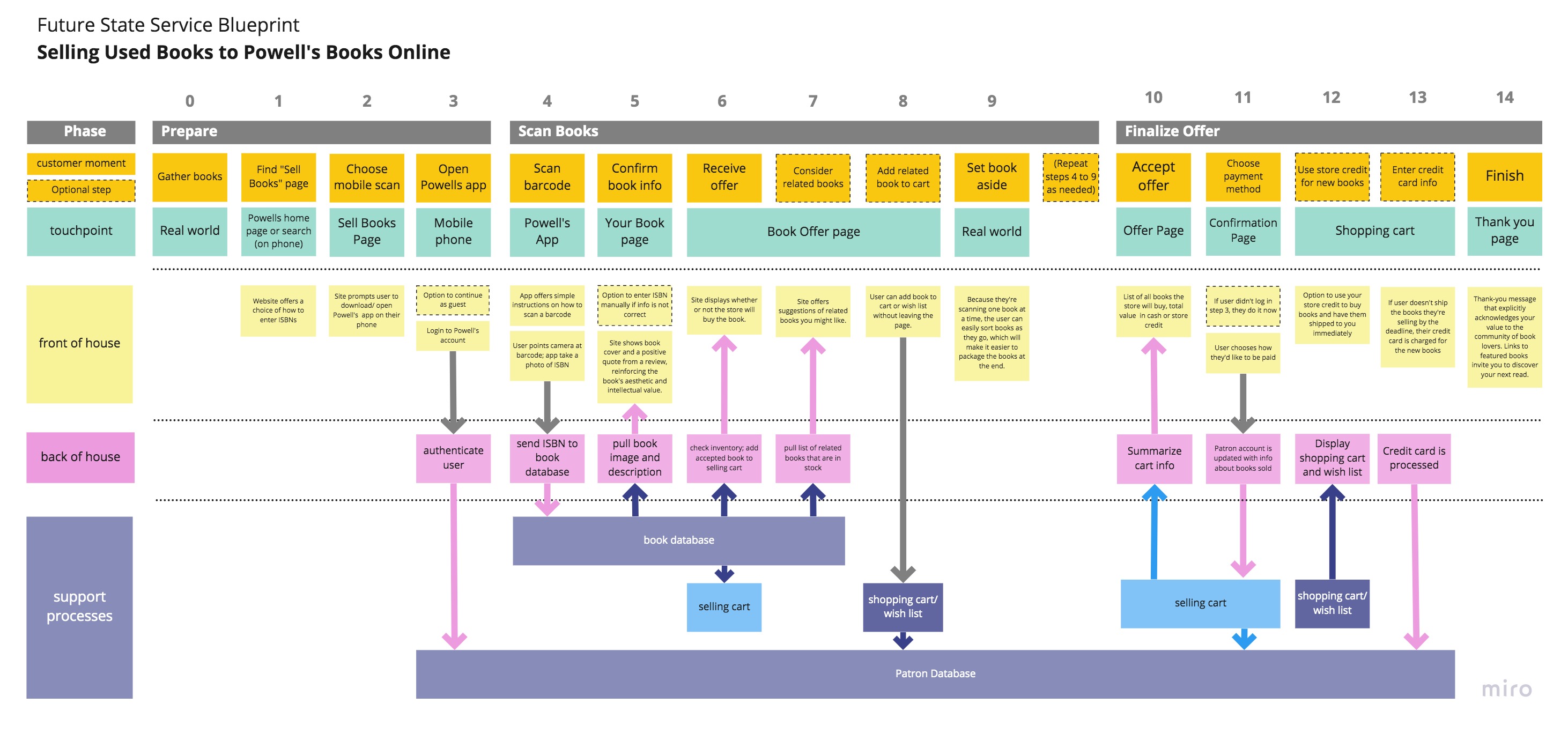
The final future-state service blueprint details a transformed process that is much easier and more fun to use.
Key features
No more typing – the site offers options for how to enter ISBNs, including using your cell phone as a scanner.
One at a time – Instead of entering all ISBNs at once, you handle them one by one. This reduces opportunities for error, makes it easier to sort and package the physical books, and gives the company a chance to promote related titles.
Reflect good taste – The site displays the cover of each book and includes a positive quote from a review (information that is available from the main Powell’s shop pages). In addition to aiding identification, this reinforces the book’s aesthetic value and subtly emphasizes the user’s taste in books, generating a sense of connection to the books themselves.
Shop while you sell – You liked that book for a reason. With each used book you enter, the site displays related books that you can add directly to your cart or wish list.
Quick purchase – When you accept the store’s offer for your used books, you have the option to use your store credit to buy books in your cart. The new books ship to you right away—no waiting for your used books to be processed first. (Of course, if the used books fail to arrive within a certain time frame, the user’s credit card would be charged).
Result
As a result of these changes, selling used books is less of a chore. The user gets to admire her old books, find some new ones, and enjoy participating in the community of book lovers to which she belongs.
 Suzanne Gray