Can a reminder app train people to recognize their own thirst?
Project
IDEO
“From Ideas to Action”
Fall 2020
Deliverables
- Clickable prototype
- Pitch deck
Key Skills
- Facilitating brainstorms
- Rapid prototyping
- User experience
- Figma
Background
In this course I built upon my previous research on healthy habits to practice IDEO’s methods for prototyping new products.
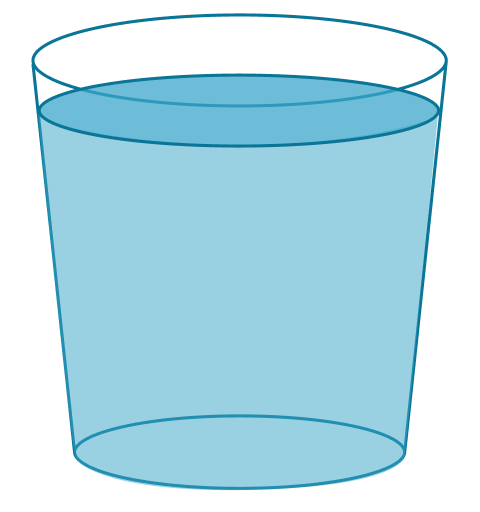
During an observation session for the last course, I’d been struck by one participant’s method for tracking her water intake: she keeps several rubber bands on a glass, removing one each time she finishes a glass of water in order to track how much she drank. I decided to zoom in on this idea.
Challenge
Today’s 70 year olds are dehydrated. Drinking enough water every day is a key component of physical health, especially for older adults. They naturally have less water in their bodies, and are more likely to have health conditions or take medications that increase the risk of dehydration.
“I knew I should drink more water, I just didn’t feel like making the effort.”
—research participant
But remembering to drink water can be hard. It’s a mundane activity that is easy to ignore. And many older adults just don’t feel thirsty very much.
How might we help 70 year olds remember to drink water?
What I Did
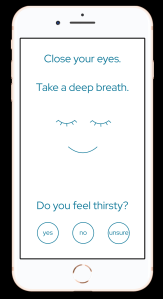
I prototyped a mindfulness-based reminder app to help users remember to drink water while also building body awareness.
At regular intervals throughout the day, the water app asks you to check in with your body using a micro-meditation. Are you thirsty? By taking a moment to note your feelings of thirst, over time you develop a keener sense of your own body while also building the habit of drinking enough water every day.
Ideation
To start, I led a remote ideation session with some friends, using Zoom and Miro. We used mashup exercises to generate ideas that combined characteristics of drinking water (free, boring, solo, mundane) with drinking a cocktail (expensive, tasty, sociable, special). Then we mashed up drinking water with getting out of bed in the morning.
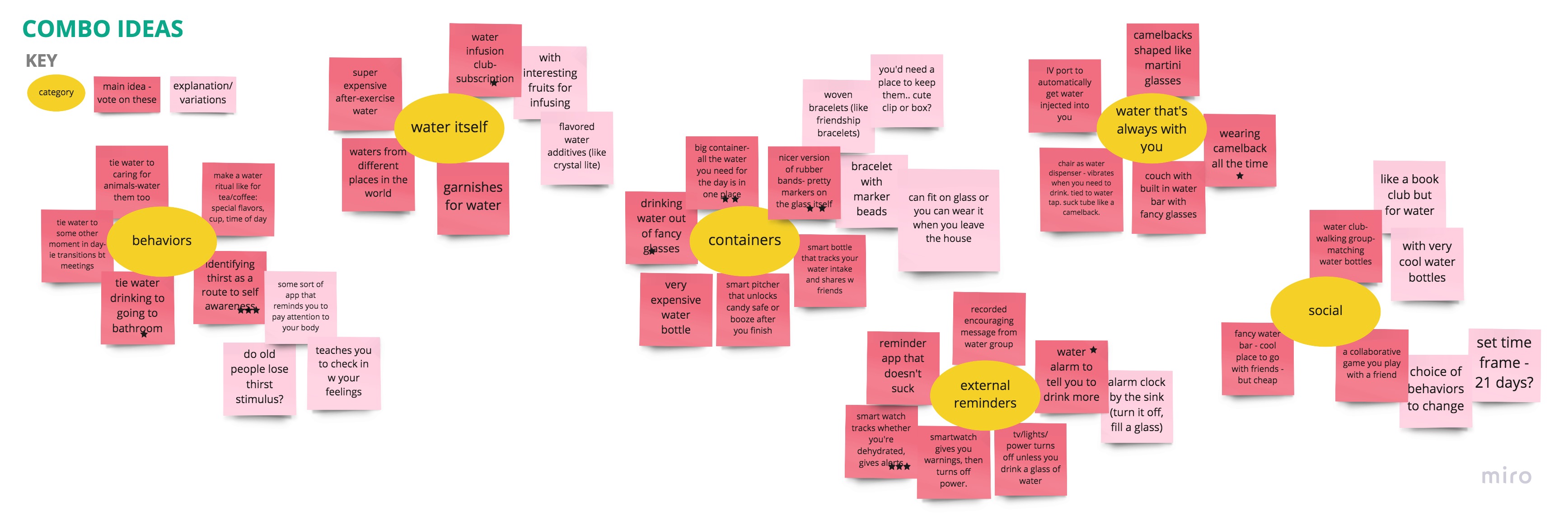
It was an energetic session that generated a lot of wacky ideas, like a “water chair”—a lounge chair with a built-in drinking tube, for the person who spends most of the day watching TV.
We brainstormed lots of reminders and trackers. Along the way we realized that we all have a built-in reminder: our sense of thirst.
But many people have trained themselves to ignore their feelings of thirst. How might we help people reconnect with that awareness?
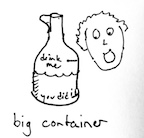
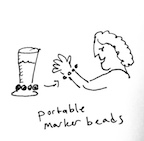
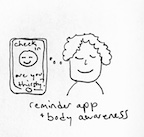
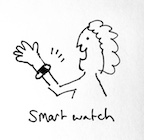
After a round of dot voting, the idea for the water app was born.
Prototype 1
I decided to prototype an app geared toward 70 year olds who are physically active, interested in health and/or mindfulness, and use a smartphone.
The app would address several unmet needs:
- To drink enough water each day
- To build a habit of drinking water
- To learn to identify their own feeling of thirst
- To develop a stronger sense of body awareness
I sketched out a couple of versions of the concept and checked my assumptions by getting feedback from a target user. She validated the concept and emphasized the importance of several features, like indicating a partial glass, and seeing the running total for the day.
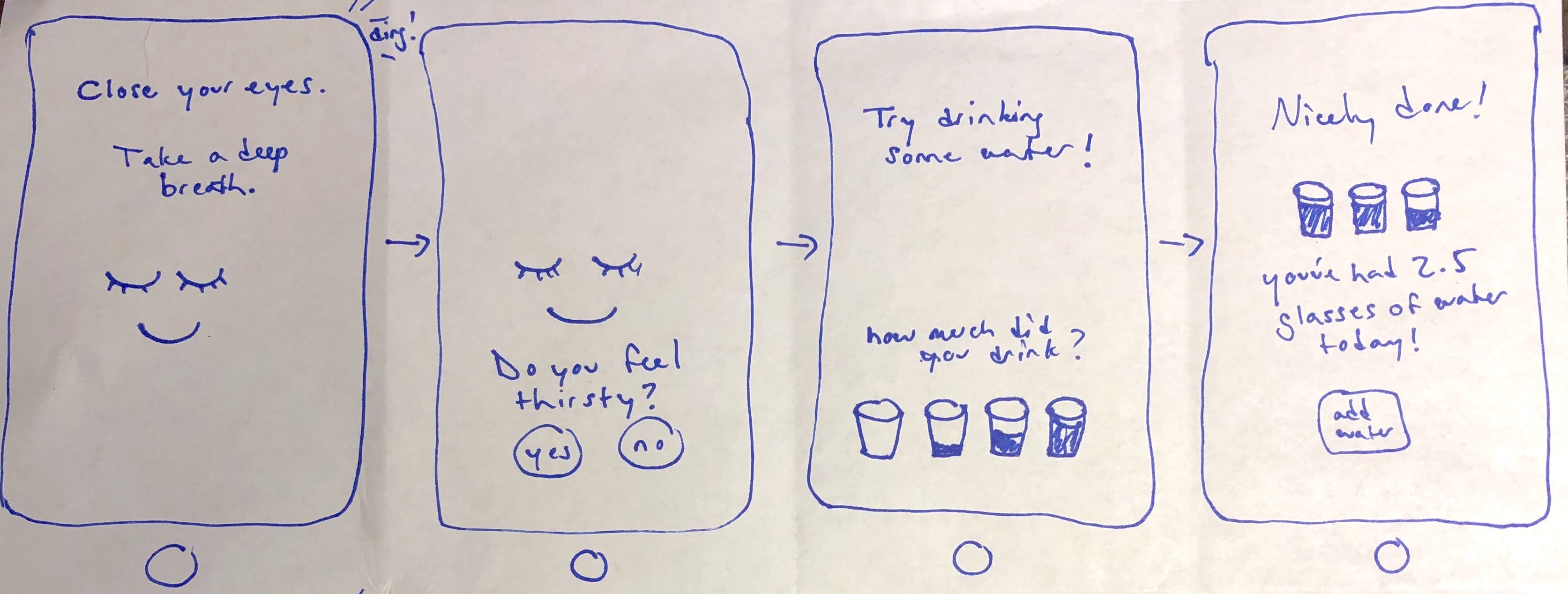
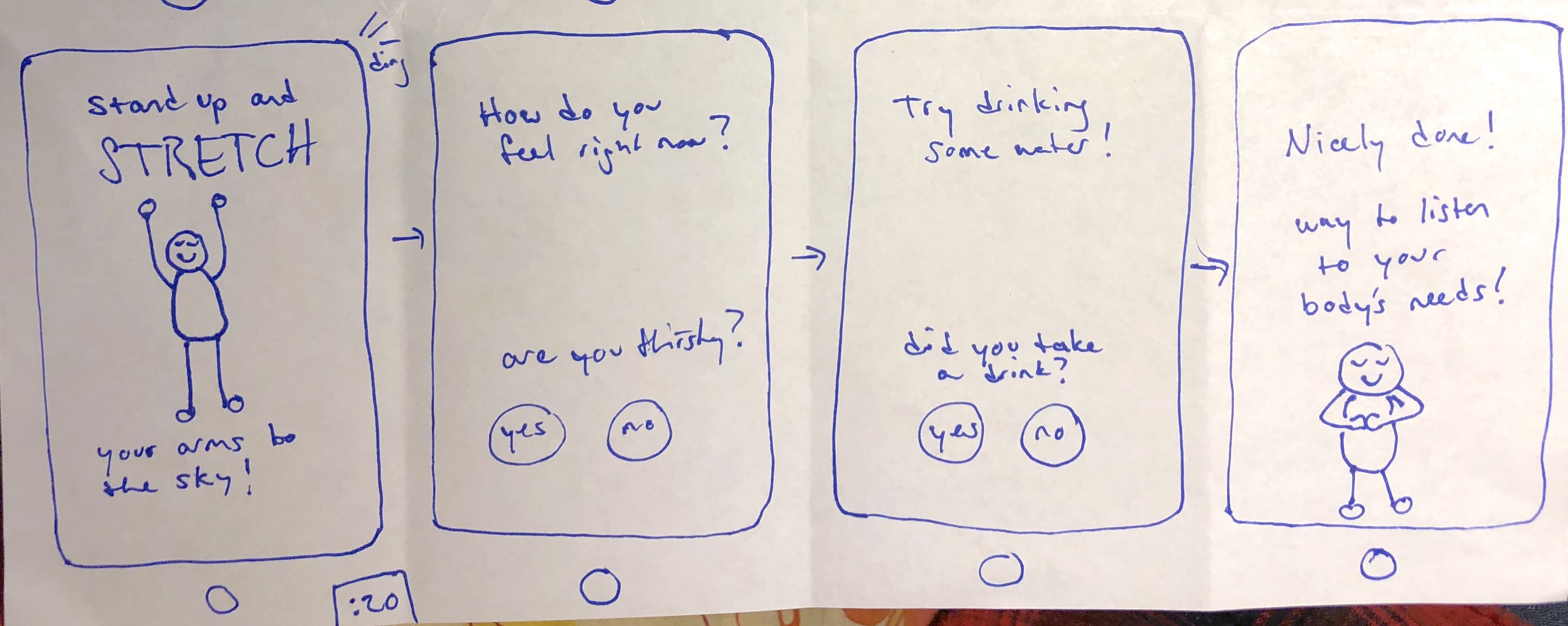
“You’re taking rubber bands to the next level!”
—Mom
Prioritizing and Ideating
Before developing a more robust prototype, I identified and prioritized several questions about the app’s desirability, feasibility, and viability.
I decided to focus the next round of prototyping on how to make the app actions more fun and satisfying to complete. My previous research had uncovered some insights about the pleasure of moving a physical marker when you’ve finished a task. Building on this, how might we celebrate the completion of each day’s water intake?
I facilitated another ideation session, in which participants used a Crazy Eights exercise to draw various rewards for completing routine tasks.
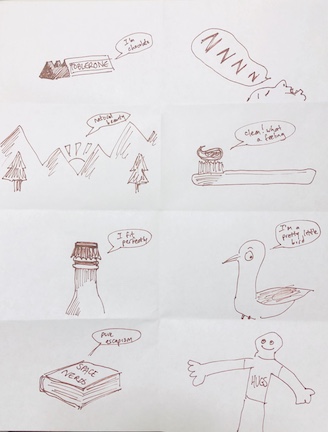
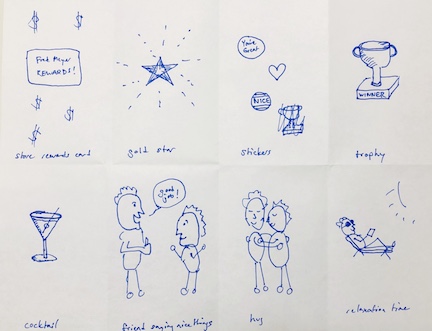
We then clumped the rewards into categories, and voted on which types of reward would be most relevant to the water app. The top choices were:
- A sense of accomplishment (pride in completing a goal)
- A sense of physical “rightness” (like when a piece of clothing fits perfectly)
- Appreciation of things outside yourself (like enjoying nature)
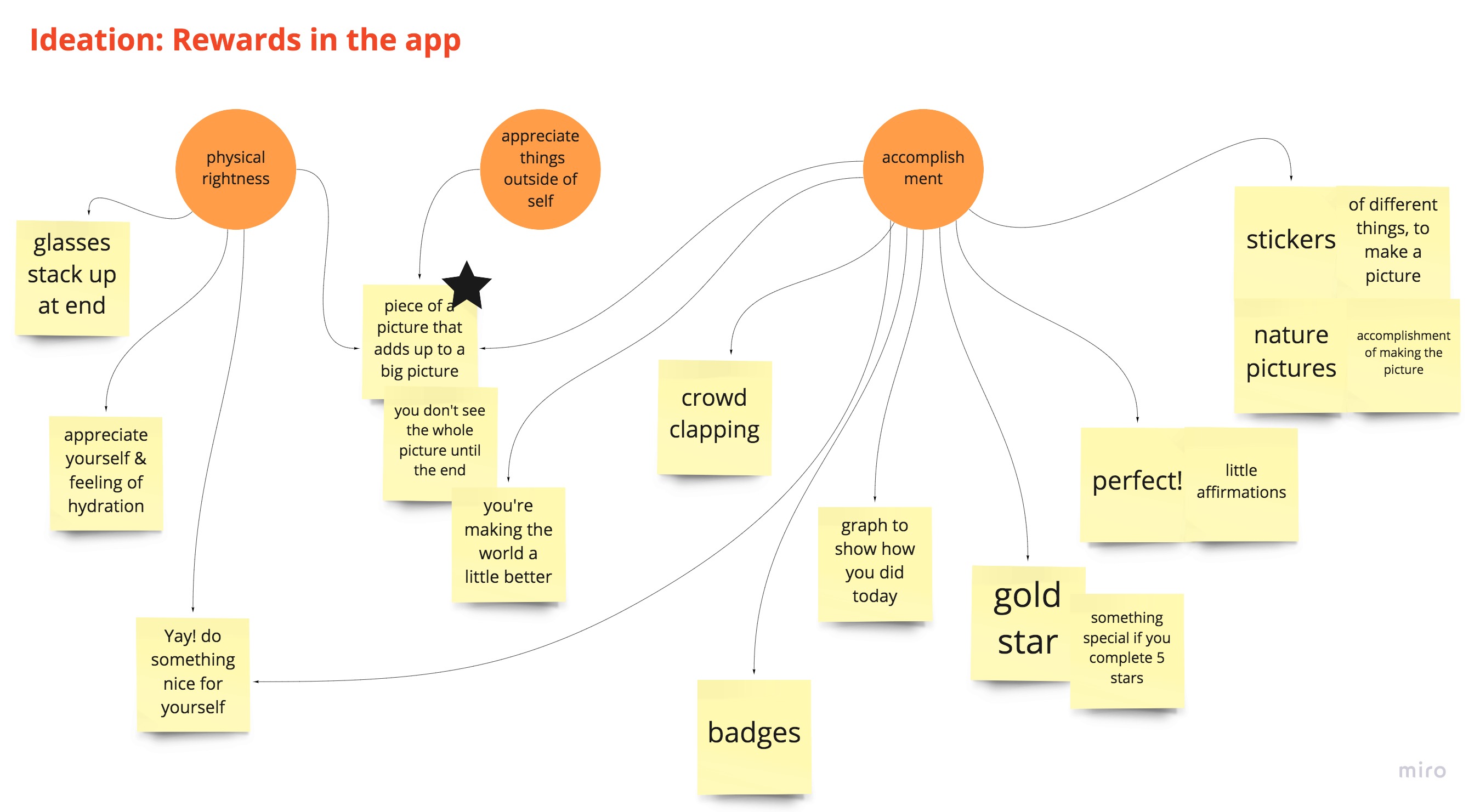
One idea emerged that encompassed all three of these concepts: your “prize” is a visual element that gets added to an illustrated nature scene. Each day that you complete your goal, you add another element to the image. (For example, you get a tree or canoe to add to a picture of a mountain lake.) This idea also ties into the concept of mindfulness and body awareness that is the point of the app.
Prototype 2
Using Figma, I built a clickable prototype of the app’s water tracking and rewards mechanisms. Then I collected feedback from multiple testers and incorporated it into the prototype.
Some features of the final prototype:
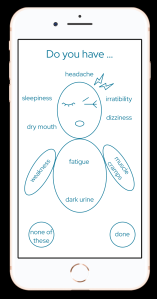
Hydration Education
Unsure if you’re thirsty? The app prompts you to check in with the physical symptoms of dehydration, then explains your symptoms so that you can learn to recognize the feeling.
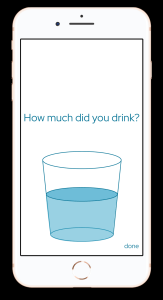
Simple tracking
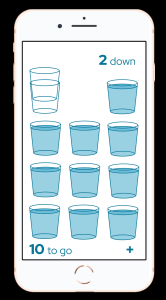
The tracking feature is intuitive and physical. Just tap to empty the glass.
Micro-rewards
When you finish a glass, it stacks itself up with a little animation, marking your progress in a satisfying way.
A Natural Reward
You met your goal for the day, congratulations! Your empty glasses transform into a visual element that gets added to a beautiful nature illustration.
Each day you meet your goal, you add a different element to the picture. The illustration becomes a visual reminder of your progress—the more you complete, the richer the image.
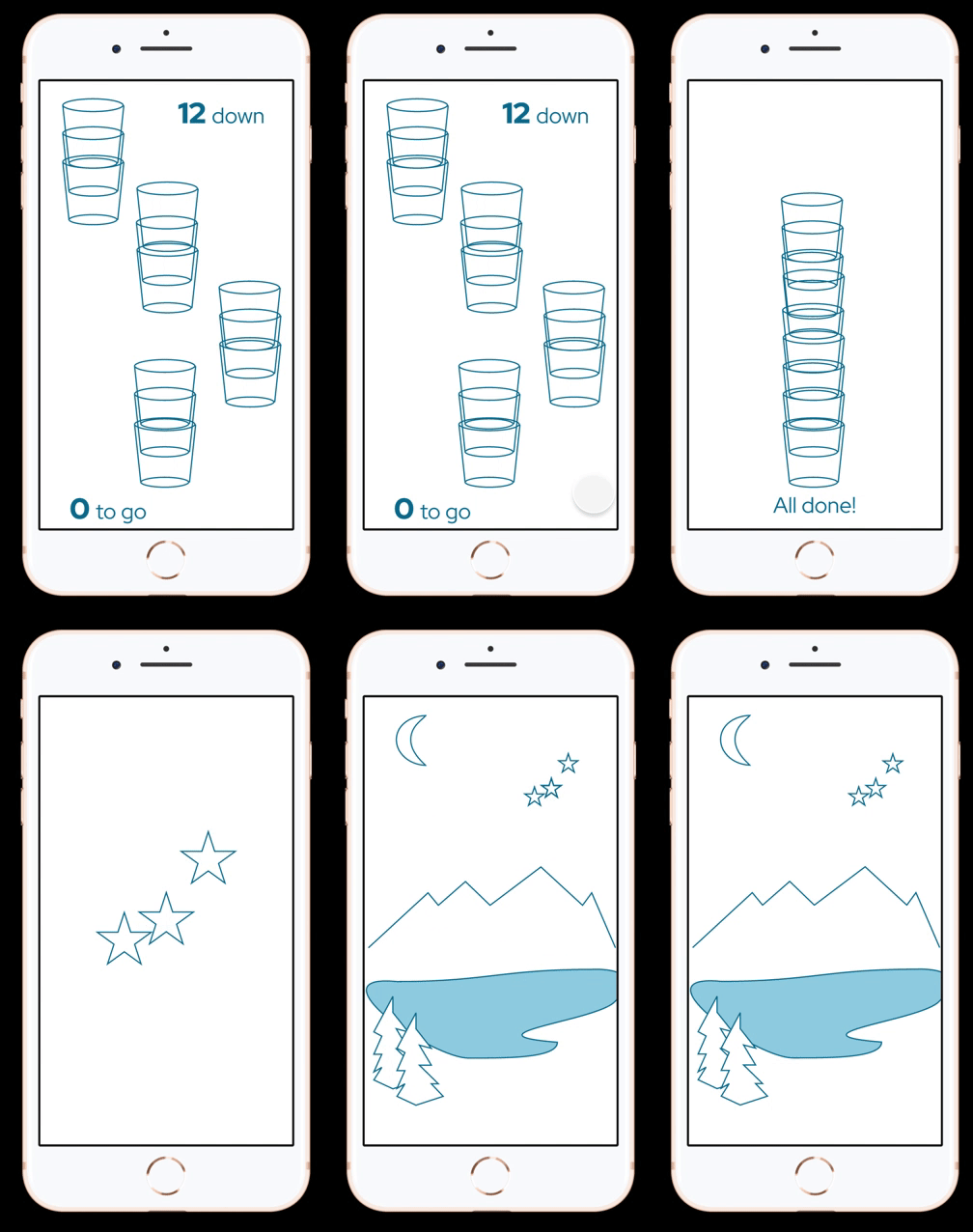
Any gold star could acknowledge a completed goal, so why use an image? Earning elements of an image reinforces that drinking water is part of a bigger picture of aliveness and connection. And because the background scene changes regularly, there’s always a delightful surprise if you finish that last glass.
Result
I presented my pitch to my IDEO class, summarizing the value proposition and key features of the app. People were enthusiastic about the concept (“I need this app!” was a common response) and I received many compliments on the thoroughness of the prototype.
“The overall concept definitely resonated with me as I’m constantly reminding my Mom to drink more water!” —IDEO class member
Next Steps
The prototype is robust enough that it would be possible to collaborate with a developer to create a working app. However, were I to continue this project, my next step would be to explore viability questions:
- How would people react to getting body-awareness prompts multiple times per day?
- Can the delightful aspects of the app really counteract the natural inclination to ignore reminders?
- And most important, would the app actually help people learn to recognize their own thirst?
I would rapidly test the reminder process by sending participants texts reminding them to drink water, and asking them to keep a diary of their responses. This would help validate and refine the viability of the mindfulness-based approach to habit building.
 Suzanne Gray